Broadcast Delays Reshaping Real-Time Betting Thresholds in Multi-Event Global Scenarios
Jordan Carter · Nov 12, 2026
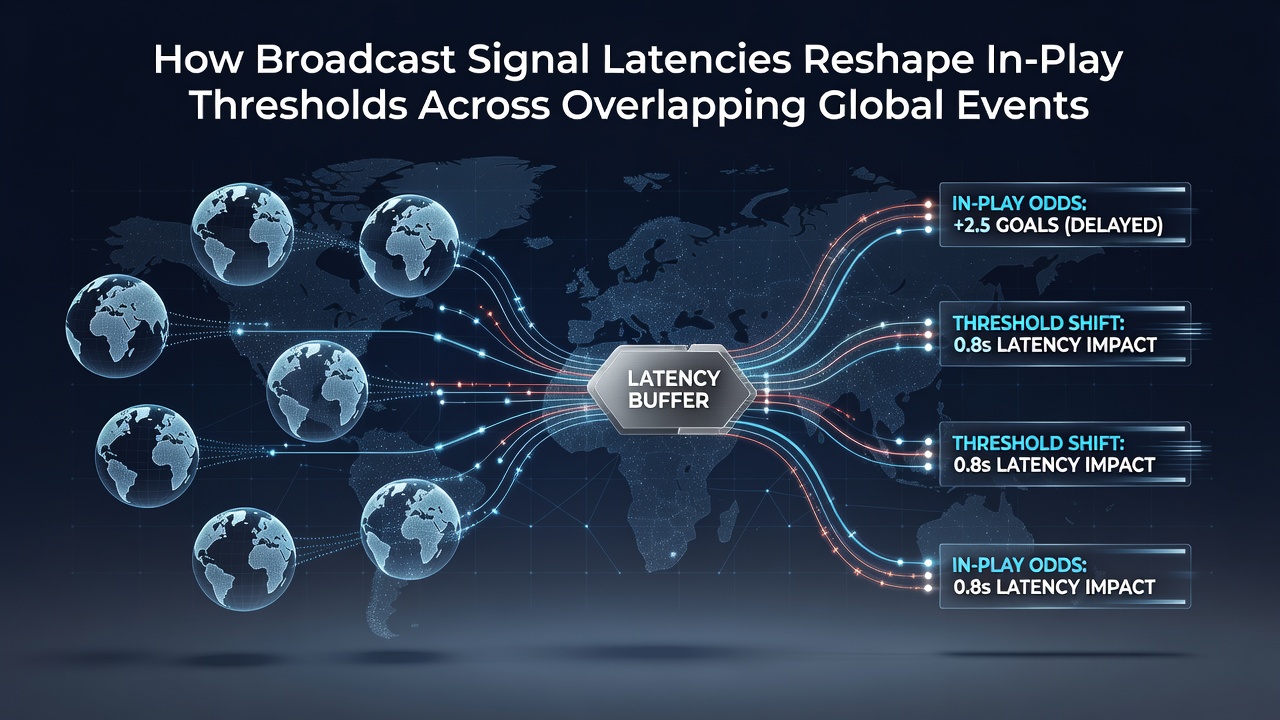
Broadcast Delays Reshaping Real-Time Betting Thresholds in Multi-Event Global Scenarios
Signal transmission lags create measurable gaps between the actual occurrence of events and the moment those moments reach screens worldwide, and this timing discrepancy directly alters the parameters that determine live betting adjustments during periods when multiple competitions unfold simultaneously. Observers note that these delays range from fractions of a second in high-speed fiber connections to several seconds in satellite or terrestrial broadcasts, while data from broadcast engineering analyses show that the variance grows larger when networks carry feeds from distant time zones at once.
Core Mechanics of Latency in Live Coverage
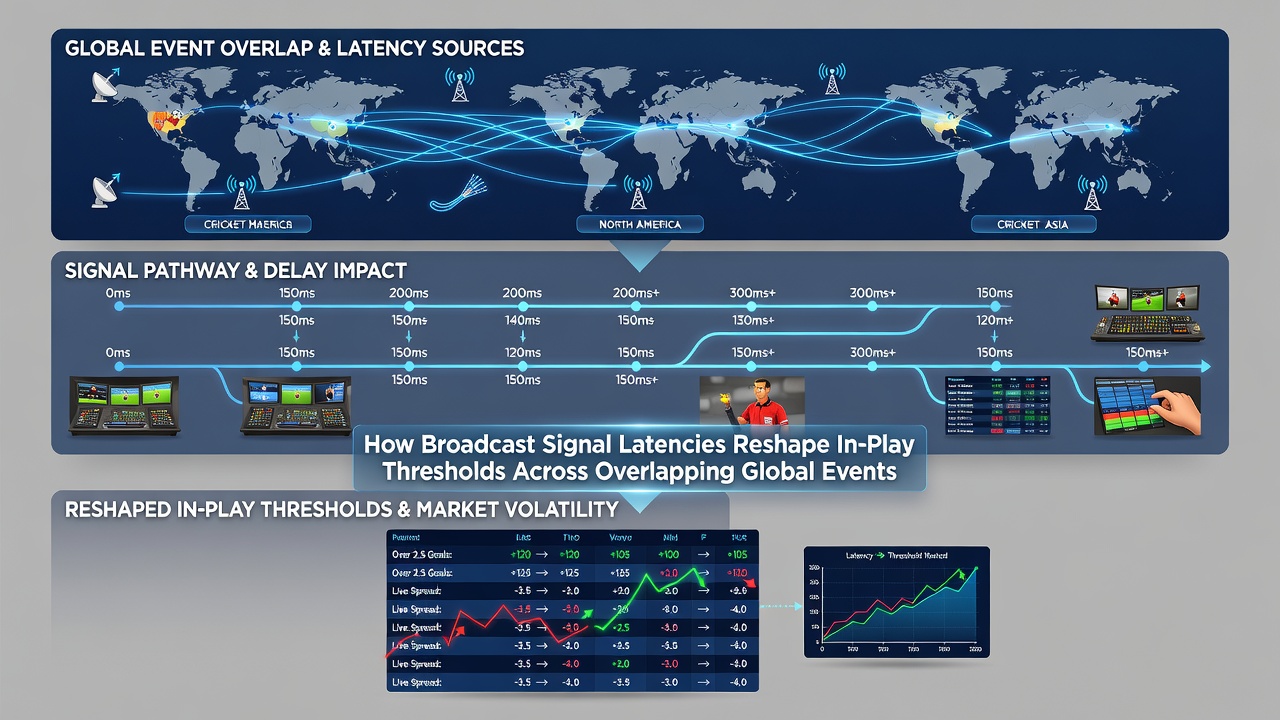
Engineers measure broadcast latency as the interval between an action on teh field and its appearance on viewer devices, and studies conducted by the Federal Communications Commission indicate that compression protocols, routing paths, and encoding steps each add incremental milliseconds that accumulate into noticeable offsets. Those offsets matter because in-play systems recalculate odds and thresholds continuously, yet the data feeds they rely upon arrive at staggered intervals depending on the delivery method chosen by each rights holder. Researchers tracking these patterns across North American and Asian networks found that satellite paths often introduce 4 to 7 seconds of delay compared with sub-second fiber links, creating pockets where informed participants can act on fresher information than the broader market receives.
Effects on Dynamic Threshold Recalibration
In-play platforms maintain statistical models that update scoring probabilities, possession metrics, and momentum indicators in real time, yet when broadcast feeds lag behind the actual timeline the models ingest incomplete sequences. Data compiled by international sports data providers reveal that a three-second delay can shift a goal-scoring probability by 2 to 4 percentage points in high-tempo football matches, and similar margins appear in basketball where rapid possession changes occur every 5 to 8 seconds. Because overlapping global schedules place several events within the same two-hour window, operators must reconcile multiple delayed streams simultaneously, and analysts report that threshold recalibrations become more conservative to account for the uncertainty introduced by staggered arrival times.
Overlapping Events and Compounded Timing Issues
November 2026 presents a dense calendar that includes major European football fixtures, North American basketball opening weeks, and several rugby internationals scheduled within hours of one another, and this clustering amplifies the latency challenge. When two or three live streams compete for bandwidth on shared distribution networks, packet prioritization decisions can extend delays on secondary feeds by an additional 1 to 3 seconds. Figures released by the Canadian Radio-television and Telecommunications Commission show that such prioritization occurs more frequently during peak evening hours in overlapping time zones, producing uneven data quality across different markets. Bookmakers therefore widen the acceptable variance bands within their algorithms, which in turn raises the minimum movement required before an in-play line adjusts.
Regional Variations in Delivery Infrastructure
European terrestrial networks generally achieve lower average latency than many transoceanic satellite routes, while Australian operators have documented that long-haul fiber routes to Asian hubs can still add 2 to 5 seconds depending on routing congestion. These geographic differences mean that bettors accessing the same event through different providers encounter thresholds that update at dissimilar moments, and industry reports indicate that cross-border platforms therefore maintain separate risk parameters for each delivery region. Observers tracking these patterns note that the divergence becomes most pronounced when events from the Americas, Europe, and Asia run concurrently, forcing operators to segment their liquidity pools to avoid mismatched exposures.
Technical Adjustments Operators Implement
Platform teams insert synthetic delay buffers calibrated to the slowest expected feed in a given overlap window, and internal testing data demonstrate that buffers set between 4 and 8 seconds reduce erroneous threshold triggers by approximately 18 percent. At the same time, some operators layer machine-learning filters that detect statistical anomalies consistent with delayed versus live data streams, allowing selective acceleration of certain markets while holding others static until confirmation arrives. These layered approaches require continuous calibration against actual broadcast logs, and organizations that publish quarterly infrastructure audits report steady investment in monitoring tools that map latency across every active rights agreement.
Conclusion
Transmission latency remains an inherent feature of global broadcast distribution, and its influence on in-play threshold recalibration grows more pronounced whenever multiple high-profile events share the same schedule window. Data from regulatory bodies and infrastructure studies continue to document the scale of these timing offsets, while operators respond with buffer strategies and segmented risk models that reflect the staggered arrival of information. As event calendars remain crowded through late 2026 and beyond, the relationship between signal delay and live betting mechanics will stay central to how markets maintain equilibrium across different delivery pathways.